
Location: Rawene and Kohukohu, North Island, Aotearoa New Zealand
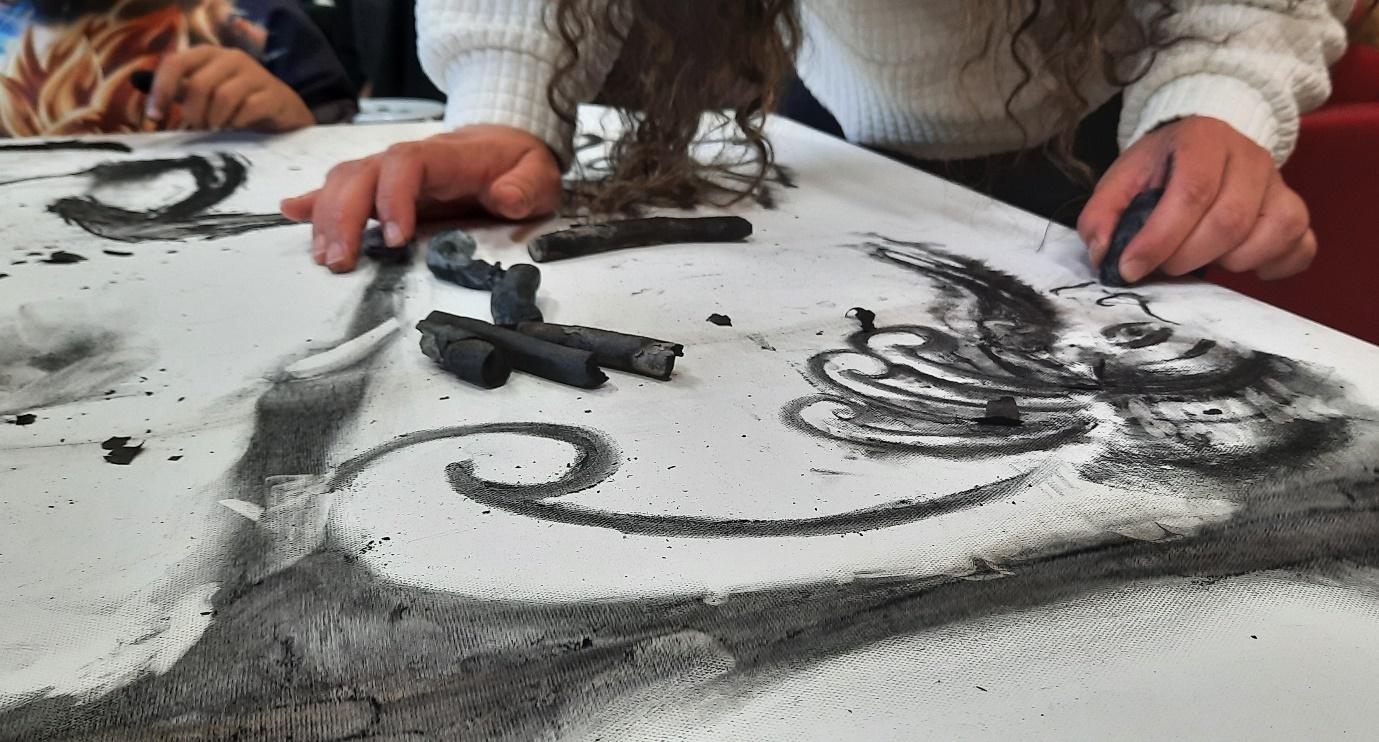
Drawing activity at Hauora Hokianga (Hokianga Health) women’s health event, Hokianga Community Campus, Rawene.
Editor’s notes: Author Laura Donkers, based in Outer Hebrides, Scotland, was an artist resident in Aotearoa New Zealand, 2020-2024. Aotearoa New Zealand is used throughout the text. Aotearoa is the Māori-language name for New Zealand, meaning “land of the long white cloud.” While not yet legally recognized as the official name of the country, the author uses the term to reflect bicultural heritage.
All photos are by the artist, unless indicated. This article is a revised version of a previously published paper on ClimateCultures website, March 13, 2025.
I. Introduction
“The only way is forward. Life on earth sometimes depends on a forceful or catastrophic act of regeneration to begin again. Te Ao Hurihuri.”
—Hiria Anderson-Mita, Contemporary Māori artist1
In 2023, as a participant of an artist residency in the historic town of Rawene, Northland, I initiated The Hokianga Community Drawing Project, a four-week collective drawing project exploring the concept of home in response to the provocation that climate change is challenging notions of belonging, community, migration, and displacement.
The project engaged two bicultural communities situated north and south of the Hokianga ferry link—the Māori, who are predominant, and the Pākehā, who are a significant minority. (“Pākehā” is a Māori term referring to the settler population of European descent.) I was a white, European visiting artist, living temporarily in Aotearoa New Zealand. The project served as an interlocutor, garnering perceptions of home from both communities in the context of climate change. Using a participatory drawing methodology, the project provided participants with the opportunity to express, as researcher Ioana Literat, associate professor at Teachers College, Columbia University, New York, New York, a “nuanced depiction of [their] lived realities” during the climate crisis.2
The Environment Aotearoa 2022 Report, released by the Ministry for the Environment and Stats NZ, notes that dealing with climate change is having a range of profound impacts on people and communities across Aotearoa New Zealand.3 To help communities face these impacts, I believe that it is of primary importance to understand how the hazards and environmental risks are perceived at the community level. This understanding was at the heart of the project: to use collaborative drawing to develop documentary evidence that stands in solidarity with people, amplifies their voices, and honors their experiences.
II. Background on the Hokianga region
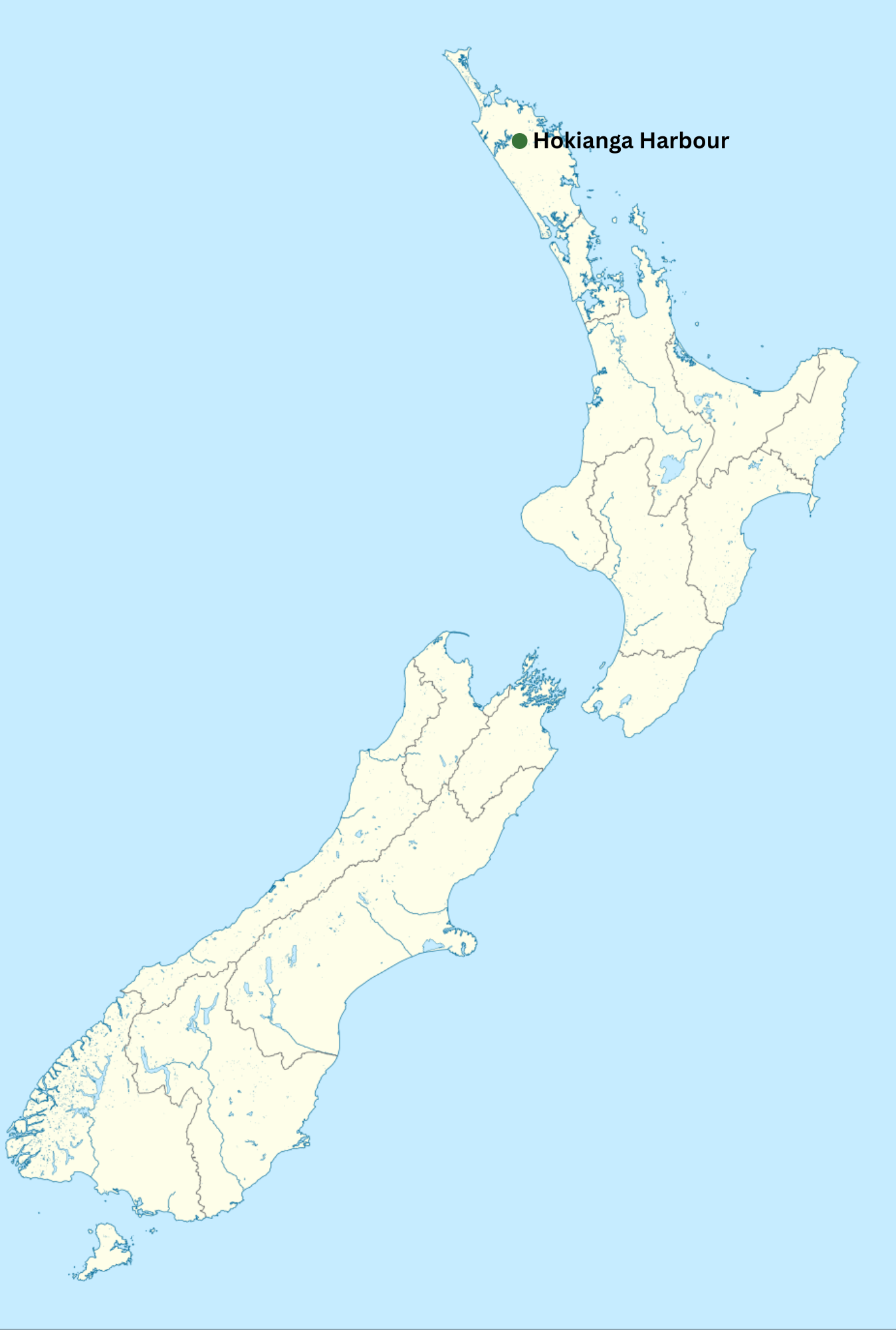
Fig. 1: Map showing the location of Hokianga Harbour (source: Wikipedia)
Located in the far North District, the Hokianga is an area surrounding the Hokianga Harbour, which is a large drowned valley on the west coast of Northland on Aotearoa New Zealand’s North Island (Fig. 1). It is one of the most socially and economically challenged areas in Aotearoa, as it is very rural and isolated. It remains deeply and visibly engaged with its indigenous and colonial heritages, recognized both for its connections to the first settlement in 800 AD by the Polynesian explorer, Kupe, and as a prime location for the later European settlement. Maori monuments and fortified sites reflect the cultural importance of protecting fertile areas and food supplies.4 The colonial history is preserved in heritage experiences, such as the home of James Reddy Clendon, U.S. Consul at the Bay of Islands in the 1830s, who acted as a witness to the Treaty of Waitangi signing in 1840.5
The dominant settler culture in Aotearoa New Zealand, which began less than 200 years ago, has altered the social demographics of the population, establishing a Western European cultural mainstream. As a result, contemporary culture is underpinned by what author Nina Evason refers to as a “strongly individualistic streak”, where a “do-it-yourself” spirit encourages “self-reliance, inventiveness, and bravery.”6 New Zealanders generally consider their society to be egalitarian, where everyone has equal opportunity to better their lives. However, compared to the white majority, disadvantages are visible in Māori society. Cultural anthropologist Toon van Meijl argues in Culture versus Class: Towards an Understanding of Māori Poverty that people who identify as Māori are more likely to earn less, have poorer health, and experience lower economic standards of living.7
The Māori worldview perceives the interconnectedness of all things as integral to spiritual, social, and environmental relationships.8 Māori are deeply rooted in values of balance, continuity, unity, and purpose.9 Their knowledge base stems from “evidence, cultural values, and world view,” according to Daniel Hikuroa’s article, Mātauranga Māori—the ūkaipō of knowledge in New Zealand.10 It is place-based and developed through ongoing processes of observation and interpretation, guided by inherited traditional values. In addition, the Māori’s close relationship with land and sea is governed by concepts of connection based on principles of whanaungatanga (kinship), manākitanga (hospitality), kotahitanga (unity), and aroha (love).11 They value and uphold ecology as kin, aligning their needs with the plural natures of other beings.12
III. Biculturalism in Aotearoa New Zealand
Biculturalism is an ideal of restorative justice for indigenous people who continue to evolve their culture in response to the fracturing impact of colonization.13 According to Anaru Eketone and Shane Walker from the University of Otago’s Social and Community Work Programme, biculturalism in Aotearoa New Zealand responds to ethnic disadvantages, which have arisen due to the loss of ninety-five percent of Māori land and the forcible suppression of Māori culture, by establishing a legal obligation to Māori people despite the continued dominance of Pākehā.14 Moving towards decolonization involves both sharing and relinquishing of power, which requires new thinking and active change from Pākehā.
Furthermore, whilst adapting to contemporary Aotearoa New Zealand culture, Māori maintain an equivalent and parallel reality resulting in constant navigation between two worlds, described by Alison Jones, a sociology of education academic at the University of Auckland, and Kuni Kaa Jenkins, a professor of education at Te Whare Wānanga o Awanuiārangi, as being both “absolutely different and never absolutely different from Pākehā.”15 This doubled position regarding their identity means that Māori recognize ethnic boundaries more than settlers do.
IV. Climate Change in Hokianga
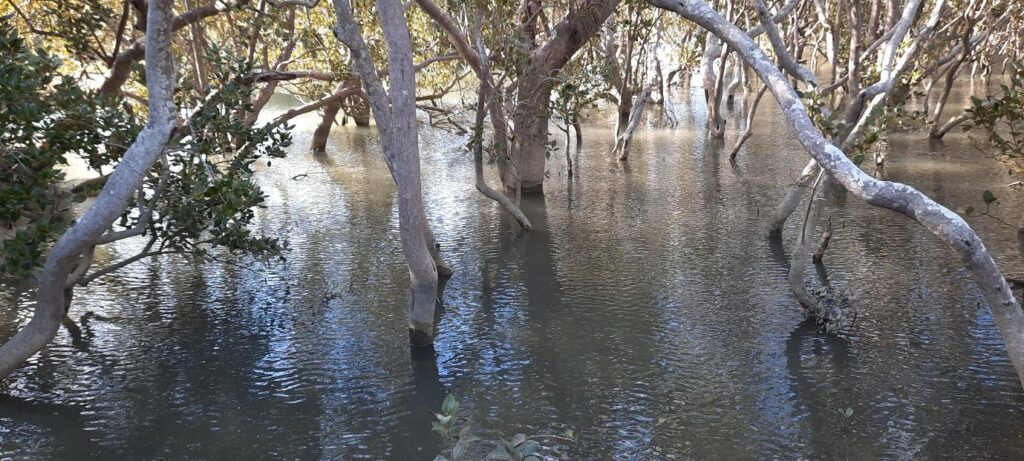
Fig. 2: Manawa/mangrove forest at Rawene.
The Hokianga region experiences severe and increasingly frequent flooding, storm surge, and heavy rainfall due to climate change. The cultural significance for the resident Māori population is complex and intertwined with the legacy of colonization, their bond with the natural world, and their multi-generational perspective of responsibility to ancestors and to future Māori generations.16 According to a report from the National Institute of Water & Atmospheric Research (NIWA), Auckland, New Zealand, the Māori of the Hokianga are particularly at risk from climate change due to limited employment opportunities and resourcing constraints that curb their abilities to adequately reduce risk and exposure and to future-proof infrastructure. Reliance on supplementing household supplies through fishing, hunting, and gardening is also adversely affected by climate change.17
Mangrove trees, called Manawa by Māori, are a feature of the Hokianga region, as they dominate the intertidal fringes. They are either respected or disliked, reflecting the fundamental differences in Māori and Pākehā perceptions regarding the mana (prestige and power) of Manawa trees as ancestors, which also encapsulate the hau (essence) of the location.18 They are often thought of as troublesome, undesirable plants by farmers, the yachting fraternity, and the real estate industry, which places a high value on property with uninhibited coastal views. What is less understood by Pākehā is the mangrove forest’s central role in the seafood chain, their capacity as breakwaters, and their storm and earth stabilizing properties—crucial when storm surge, flooding, and extreme rainfall are causing severe coastal erosion (Fig. 2).19
V. The Hokianga Community Drawing Project
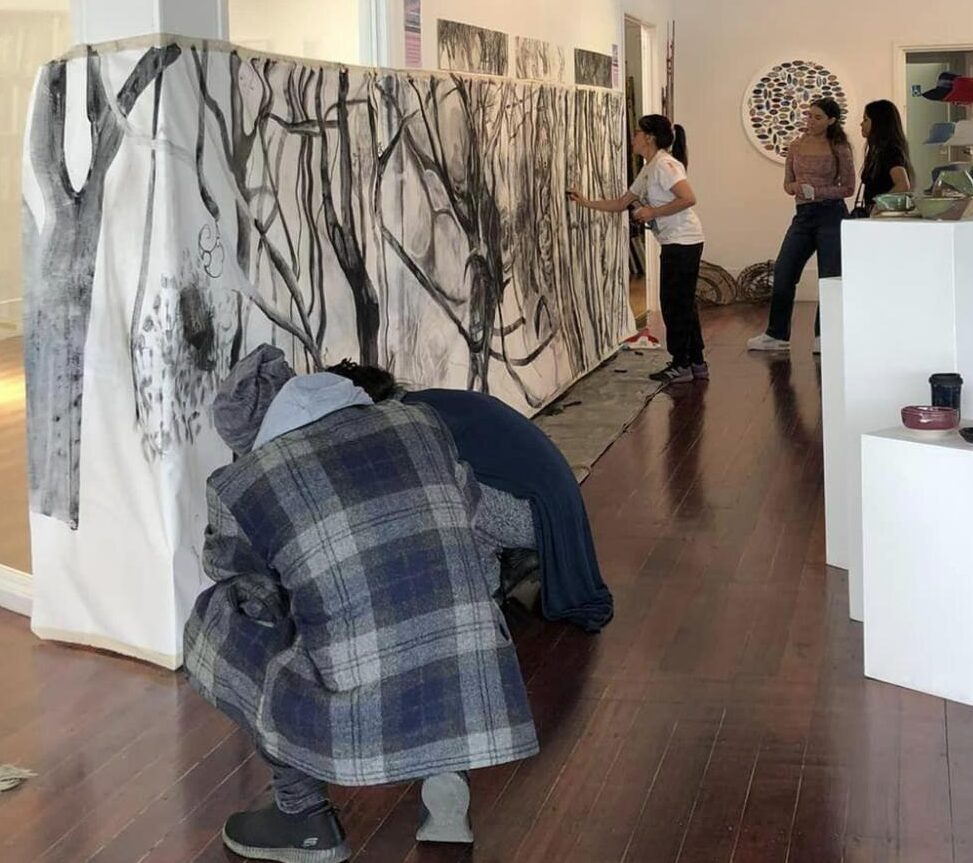
Fig. 3: Drawing workshop at number 1, Parnell Gallery, Rawene.
According to artists and researchers Sarah Casey and Gerald Davies, collective drawing has the capacity to “initiate relationships with environments and phenomena.”20 It uses the “visual voice” in an arts-led, participatory method to yield culturally relevant perspectives, per public health researchers Jessica G. Burke, Elizabeth Miller, and Michael A. Yonas.21 Through processes of visual conceptualization and subsequent reflective discussion, participants are empowered to express, perhaps, hitherto unvoiced thoughts. To this end, I sought to deploy the creative agency of collective drawing, through the Hokianga Community Drawing Project, to achieve a non-textual depiction of how the climate crisis is affecting communities in the Hokianga.
At the onset of the project, however, I did not yet comprehend the reality of being a white, European stranger in a Māori-dominated community and how that would complicate my attempts to engage with local social institutions such as schools, environmental, and political groups. All my early attempts at communication, initiated months before taking up the residency, were either rejected or remained unanswered. The issue of my temporary presence in the community centered around whether I had a right to be in this land, and how my own life was entangled with the ongoing dispossession of Māori from their land and culture.
I realized that building the kinds of relationships that allow deeper participation and insight would require much more than the four-week timescale afforded me. I decided to open space for any level of interaction with the community by moving my drawing project onto the street. I was open to seeing what would happen. This adaptation introduced an element of risk and vulnerability to the project and became a way of meeting people who might shy away from sharing their personal experiences in more formal workshop settings.
I was invited to present my project at a bicultural women’s health awareness evening run by the local health board. This was an opportunity for me to be seen publicly and for my project to be encountered, engaged with, or disregarded. Additionally, two community galleries invited me to deliver drawing sessions for their members (Fig. 3), and I later received offers to run street-based workshops at a second-hand book sale run by the local library and a weekly produce market.
Fig. 4: Drawing activity at Hauora Hokianga (Hokianga Health) women’s health promotion event, Hokianga Community Campus, Rawene.
An image of the Manawa Forest was used as a key compositional framework to evoke connection to the Hokianga landscape, meant to help participants feel their way into contributing to the collective visual terrain. The workshops made use of simple materials that were safe to handle and durable enough to withstand the rigors of the program. The materials included a primed canvas roll (10 meters by 1.5 meters) and home-made charcoal from the local Manawa (Fig. 4). The Manawa also proved to be a valuable means for initiating discussion due to its cultural significance as a symbol of strength and endurance, and connection between humans and their environment.
VI. Participatory Encounters
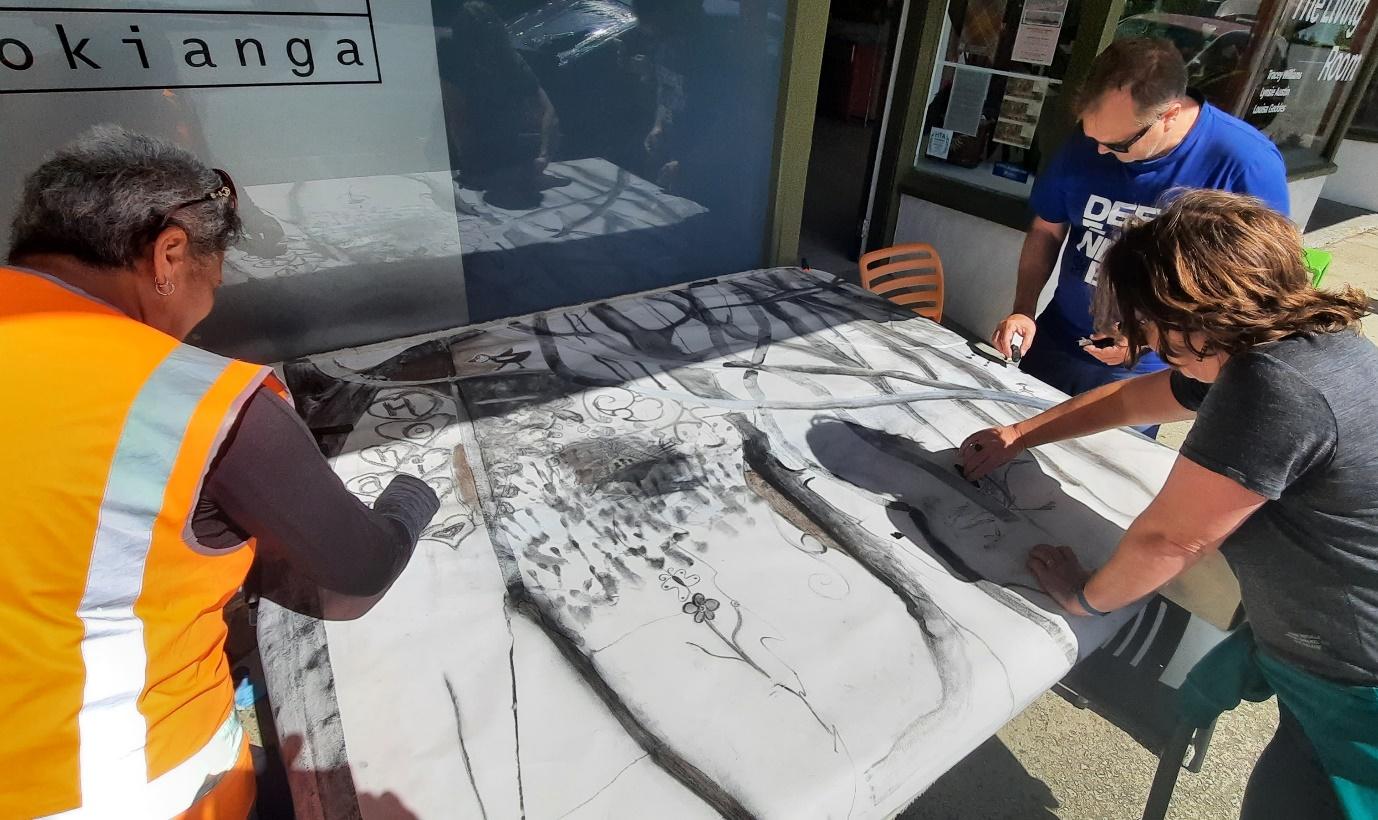
Fig. 5: Drawing workshop on the street outside Village Arts, Kohukohu.
Community members encountered the collective drawing workshop at common meeting places, along daily thoroughfares, at street-level, and during community events and markets. Māori and Pākehā participated. Due to the public nature of the venues, participants had the opportunity for free expression and conversation that traversed age, gender, race, and economic boundaries.
I invited passersby to contribute a drawing, or just some marks, if they expressed doubts about their drawing skills. These invitations were mostly accepted, and onlookers quickly joined in. Through this process, participants created a collective visual record of significance and meaning, one that was grounded in shared perspectives of daily life in the Hokianga.
I had many meaningful interactions. For example, a Māori council worker who was emptying nearby bins glanced over to the drawing table that I had set up on the street. I invited her to contribute, and she responded with the common phrase, “But I can’t draw.” I suggested that she use the Manawa charcoal to see what sort of marks it would make, rather than worrying about drawing.
The mention of charcoal sparked a lively discussion about how I had made it and why I had chosen Manawa specifically. She was interested in participating, but she had to work. An hour later, she returned to talk some more and expressed how much she liked the idea of mark-making, as opposed to representational drawing. She then picked up a piece of charcoal.
The session was busy with contributors who were encouraging passersby to join in. So, some time went by before I realized that the council worker was still there, deeply engaged in making her marks (Fig. 5). She had drawn the letters “HOKIANGA” on the last empty space at the left-hand edge of the canvas. When I noticed this, I explained to her that, although she was making the final marks of the drawing, her marks would be seen as the beginning when the piece was exhibited. She was amazed at this idea and started discussing it excitedly with another Māori woman who was also drawing.
They shared a phrase with me, te ao hurihuri, which means revolving world. They explained this as an important Māori concept that provides meaning beyond day-to-day activities, connecting the contemporary world and modern practices with Māori cosmology and genealogy. I could tell that this revelation had elevated how each of them felt about contributing to the drawing. Their discussion also inspired a revelatory moment for me. I realized that the drawing, as interlocutor, had captured the concept of climate crisis as both an ending and a new beginning.
VII. Project Outcomes
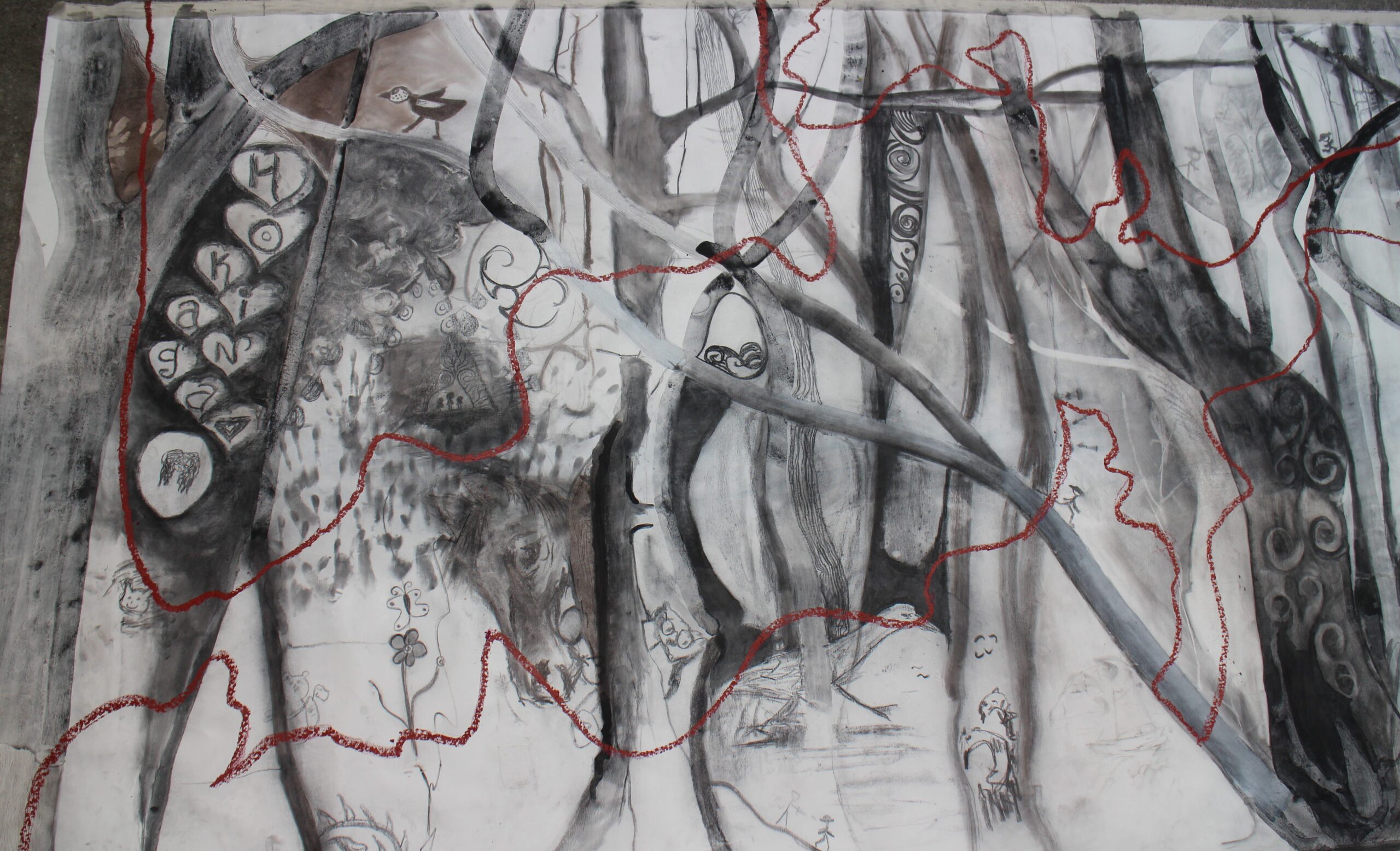
Fig. 6: Detail, at the end of the beginning.
“Lived experience as a foundation for drawing captures what has been sensed, felt, thought about and performed.”
—Wilhelm Dilthey21
The finished drawing of The Hokianga Community Drawing Project represents a collective visual expression of home by two communities that navigated cultural differences to uncover solidarity, appreciation, and respect. The project offered a place to reflect on the impacts that extreme weather events might be having on property, travel plans, infrastructure, supply chains, and livelihoods. It disclosed a shared emotional connection to location, place, and community, expressed via the medium of collective drawing (Fig. 6). I hope, too, that it revealed to its contributors a deeper, more visceral connection to their shared home, the Hokianga.
VIII. Final Thoughts
Climate change is intrinsically linked to broader social issues such as housing, environmental degradation, access to public services, and poverty. Our concept of home, the way that we live with one another in our environments, is being regenerated through the impact of climate change. These life-altering impacts are creating an urgent need for exchange and dialogue to foster new connections and understanding between people and cultures.
While creative projects in themselves cannot alter the impacts of environmental and ecological destruction, they can do two important things. Firstly, they can help to uncover shared emotional connections to place and community, and, secondly, they can promote dialogue between individuals about environmental calamity and injustice, bear witness to it or advocate for those who live with its consequences.
ENDNOTES
- Hiria Anderson-Mita, Te Ao Hurihuri: at the end of the beginning, exhibition text, Tim Melville Gallery, December 2020, https://www.timmelville.com/exhibition/te-ao-hurihuri-at-the-end-of-the-beginning/.
- Ioana Literat, “A Pencil for Your Thoughts: Participatory Drawing as a Visual Research Method with Children and Youth,” International Journal of Qualitative Methods 12 (2013), https://journals.sagepub.com/doi/pdf/10.1177/160940691301200143.
- Ministry for the Environment & Stats NZ, New Zealand’s Environmental Reporting Series: Environment Aotearoa 2022, quoted in Ioana Literat, “A Pencil for Your Thoughts: Participatory Drawing as a Visual Research Method with Children and Youth,” International Journal of Qualitative Methods 12 (2013), https://journals.sagepub.com/doi/pdf/10.1177/160940691301200143.
- “Where Land and Story Collide: Examining Pā Sites Throughout Aotearoa,” Explore AZ Tours, accessed September 17, 2025, https://exploreaztours.com/where-land-and-story-collide-examining-pa-sites-throughout-aotearoa/.
- “Heritage,” Hokianga Tourism Association, accessed September 17, 2025, https://www.hokianga.com/heritage.
- Nina Evason, “New Zealand Culture: Core Concepts,” Cultural Atlas, 2016, https://culturalatlas.sbs.com.au/new-zealand-culture/new-zealand-culture-core-concepts.
- Toon van Meijl, “Culture versus Class: Towards an Understanding of Māori Poverty,” Race & Class 62, no. 1 (2020): 78–96, https://doi.org/10.1177/0306396820923482.
- Lesley Rameka, “A Māori Perspective of Being and Belonging,” Contemporary Issues in Early Childhood 19, no. 4 (2018): 367–78, https://doi.org/10.1177/1463949118808099
- Gamini Wijesuriya, “Conserving Living Taonga: The Concept of Continuity,” in Decolonising Conservation (Routledge, 2007), https://doi.org/10.4324/9781315430614-13
- Dan C. H. Hikuroa, “Mātauranga Māori—the ūkaipō of knowledge in New Zealand.” Journal of the Royal Society of New Zealand 47, no. 1 (2016): 5-10, https://www.tandfonline.com/doi/full/10.1080/03036758.2016.1252407.
- Teah Carlson, Helen Moewaka Barnes, Susan Reid, and Tim McCreanor, “Whanaungatanga: A Space to Be Ourselves,” Journal of Indigenous Wellbeing 1, no. 2 (2016): Article 5, https://core.ac.uk/download/pdf/228923832.pdf
- “Māori and Biodiversity,” Environment Foundation, accessed September 17, 2025, https://www.environmentguide.org.nz/issues/biodiversity/maori-and-biodiversity/.
- Jessica Terruhn, “Settler Colonialism and Biculturalism in Aotearoa/New Zealand,” in The Palgrave Handbook of Ethnicity, ed. S. Ratuva (Singapore: Palgrave Macmillan, n.d.), https://doi.org/10.1007/978-981-13-0242-8_71-1
- Anaru Eketone and Shayne Walker, “Bicultural Practice: Beyond Mere Tokenism,” in Social Work for Sociologists, ed.Katrina van Heugten and Angela Gibbs (Palgrave Macmillan, 2015): 103–119, https://doi.org/10.1057/9781137389688_7.
- Alison Jones and Kuni Jenkins, “Indigenous Discourse and ‘the Material’: A Post-interpretivist Argument,” International Review of Qualitative Research 1, no. 2 (2008): 484, https://doi.org/10.1525/irqr.2008.1.2.125.
- Gamini Wijesuriya, “Conserving Living Taonga: The Concept of Continuity,” in Decolonising Conservation (Routledge, 2007), https://doi.org/10.4324/9781315430614-13
- D. Ashford-Hosking, J. Bind, W. Dalton, et al, “Coastal Adaptation to Climate Vulnerability and Change: Examining Community Risk, Vulnerability and Endurance at Mitimiti, Hokianga, Aotearoa-New Zealand,” National Institute of Water & Atmospheric Research (NIWA) report (2013), https://ref.coastalrestorationtrust.org.nz/documents/coastal-adaption-to-climate-vulnerability-and-change-examining-community-risk-vulnerability-and-endurance-at-mitimiti-hokianga/.
- “How We Belong – Te Parawhau and the Mangrove Tree,” Pihirau, accessed September 17, 2025, https://pihirau.co.nz/blog/2018/08/01/how-we-belong-te-parawhau-and-the-mangrove-tree/
- Sarah Marie Casey and Gerald Davies, “Drawing Out the Mute: Speaking Through Drawing,” in Collective and Collaborative Drawing in Contemporary Practice: Drawing Conversations, ed. J. Journeaux and H. Gorrill (Cambridge Scholars Press, 2017), https://eprints.lancs.ac.uk/id/eprint/124623/.
- Jessica G. Burke, Elizabeth Miller, and Michael A. Yonas, “Visual Voices: A Participatory Method for Engaging Adolescents in Research and Knowledge Transfer,” Clinical and Translational Science 6, no. 1, (2013): 72–77, https://doi.org/10.1111/cts.12028.
- Rudolf A. Makkreel and Frithjof Rodi, “Reviewed Work: Wilhelm Dilthey, Selected Works, Volume V: Poetry and Experience,” International Journal for Philosophy of Religion 5 (Princeton University Press, 1987), https://www.jstor.org/stable/40036417.
WEAD MAGAZINE ISSUE No. 15, PLACE SETTINGS
Published 2026