
Location: Muscat, Oman; Kansas and Washington State, USA
Editor’s note: Photos and art are by the author of each section, unless otherwise indicated.

The Soil Remembers, Coastal Beaches (detail), Rhonda Janke and Deanna Pindell, mixed media, 42” x 24” x 24”, Fort Worden State Park, Washington, USA, 2011-2013. Photo: D. Pindell
I. Introduction
Soil: Is it alive? How do we know? What started as a simple lab exercise for agricultural students, “bury a piece of cloth,” has now emerged as an art form that allows microbes to “speak” to us. Soil scientists in the 1940s started using buried cloth as a test of soil microbial activity, ironically, by adding fungicide to the cloth.1 Now it is a global test of microbial activity in soil and in water.2,3 In this paper, we explore both our own and other artists’ interpretations of this conversation with the microbes. The process is simple: bury biodegradable cloth, usually cotton, for approximately 30 days. The results are complex. Feelings emerge. Patterns depend on the location, soil type, the time of year, and other factors.
In human history, the making of textiles is as old or older than the discovery of agriculture, and both practices are deeply intertwined. Humans depend on soil. What can we learn from the microbes?
II. Art, Science, Soil, Agriculture by Rhonda Janke
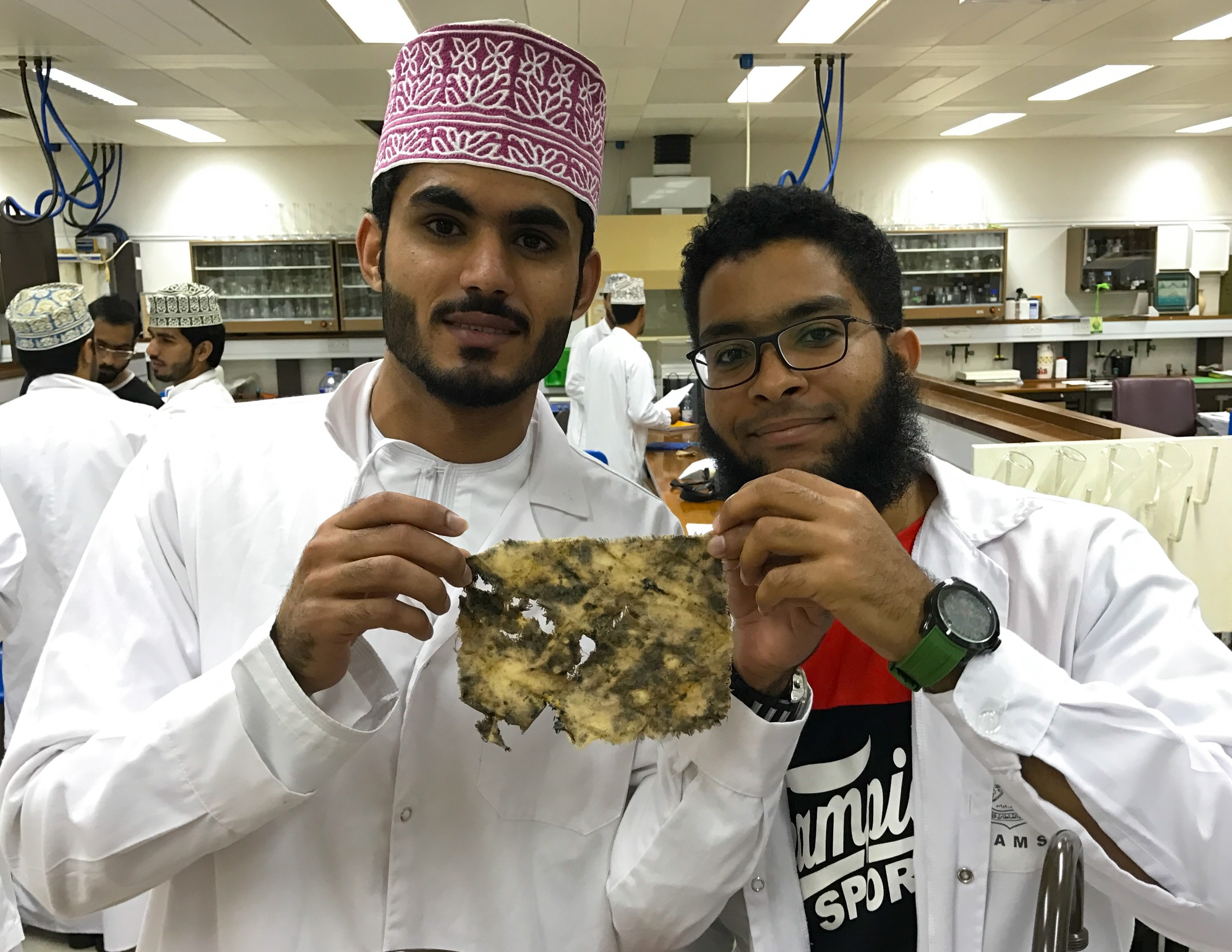
Fig. 1: Agriculture students in Oman show the cotton cloth they buried as a soil health indicator.
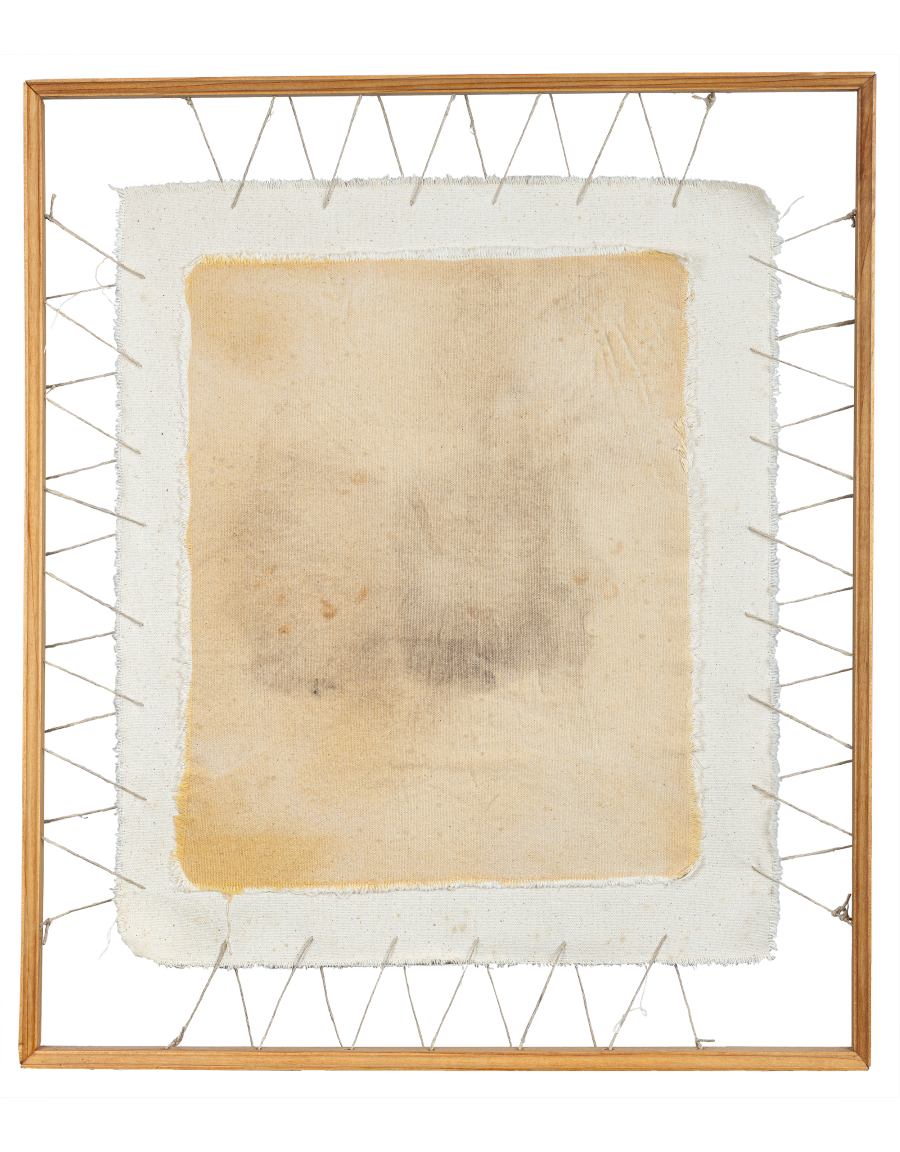
I began experimenting with the burial of cloth in soil about 15 years ago, starting with garden beds on my organic farm in Kansas. I read a reference for a method, started in Europe in the 1940s, to test various fungi-resistant textiles.1 Burying natural, untreated cotton cloth resulted in a diversity of patterns left by the microbes on the cloth, even after the soil was washed off.
That year, I was teaching an organic farming course at Kansas State University. I used this exercise with my students, asking them to bury one piece of cloth in good soil and one in poor soil. I also did this with students when I was on sabbatical in the country of Jordan in 2014 and while teaching in Oman from 2015 to 2024 (Fig. 1).
One of the goals of organic farming methods is to increase the microbial diversity, abundance, and activity.4 Microbes are expensive to measure quantitatively and difficult to observe, even with a microscope. However, the decomposition of the cloth incorporates a range of soil attributes—chemical, physical, and biological—and soil moisture and temperature. Almost without exception, the cloth in good soil decomposes faster and shows more patterns and designs than cloth in poor soil. Students are usually amazed that anything in the cloth changed at all! They are not used to thinking of soil as a living entity.
-

- Figure 2a: Untitled 1, buried cotton cloth, wooden frame, 22” x 20”, Wamego, Kansas, 2010.
-
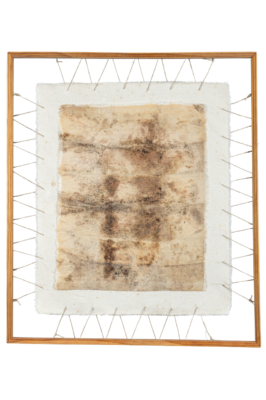
- Figure 2b: Untitled 2, buried cotton cloth, wooden frame, 22” x 20”, Wamego, Kansas, 2010. Photos: David Mayes

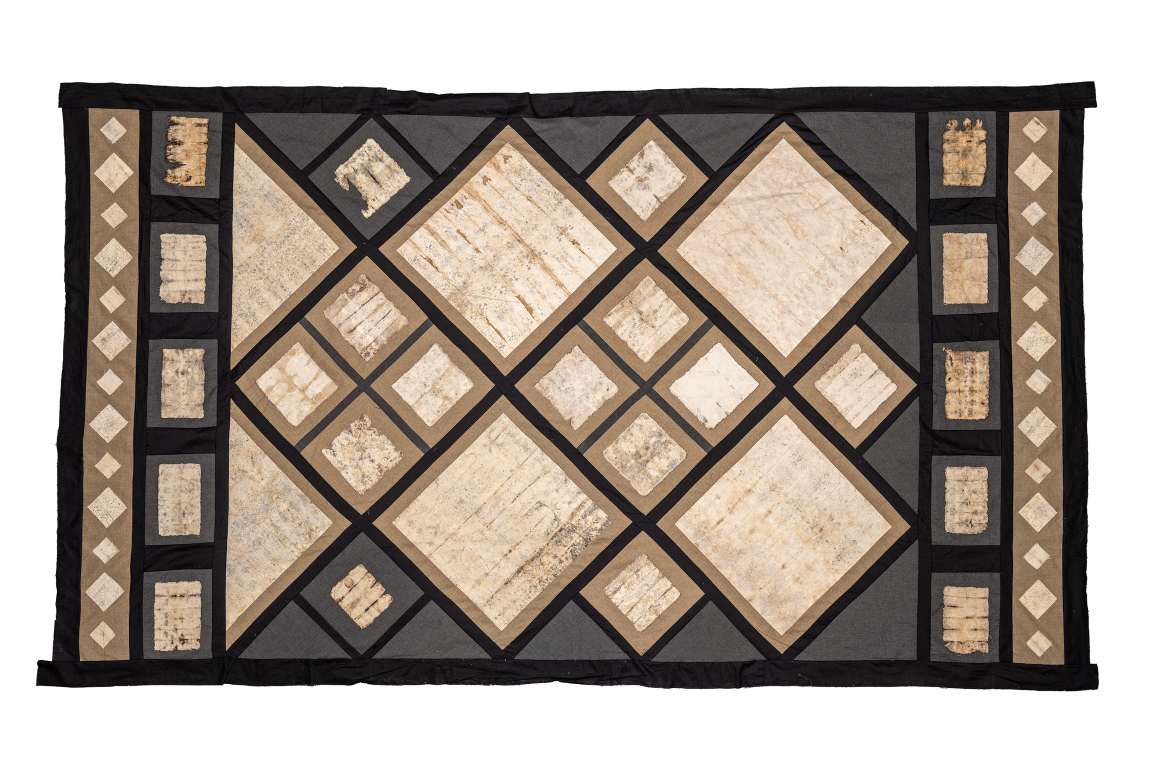
Fig. 3: Ancient Soils, quilt made from buried cotton cloth, commercial cotton fabric backing, 108” x 63”, Oman and Kansas, 2024. Photo: David Mayes
In addition to space and place, another question is how time affects the microbes. For one calendar year, I buried cloth for a month at a time at certain locations on my farm in Kansas, with each month beginning on the full moon.5 Not surprisingly, the cool temperatures of January and hot temperatures in July and August slowed the decomposition, resulting in nearly white cloth. Active months for microbes were spring and fall, when the moderate temperatures resulted in a lot of color. In May and June, the months when the crops were bursting forth and nutrients were cycling, the cloth was nearly gone, decomposed by the active microbes.
Emotions also emerge when the cloth is unburied. For example, in a collaboration with my fellow students at Goddard College, I sent out 27 pieces of fabric.6 Twelve were returned with photos and results. The experiment unearthed some long-buried memories.
“The cloth has been altered by participating in the natural processes of the soil, of the earth, reminding me of the cycles of transformation inherent in this existence.”
“… it reminds me of the shamanic tradition of travelling to the Lower World for personal transformation and to reinforce our connection to the planet, our home and source of life.”
“It was an archeological feat to salvage any of the fabric.”
Several people buried, but could not find, the fabric after waiting the suggested 30 days. Explanations varied:
“I waited too long, and now my fabric is frozen in the ground….”
“If I don’t find it, can it remain lost?”
At this point, I realized that this might be more than a simple lab exercise. It might provide a link, or emotional bond, between people and the microbes that help take care of our soil, the soil that feeds us.
-
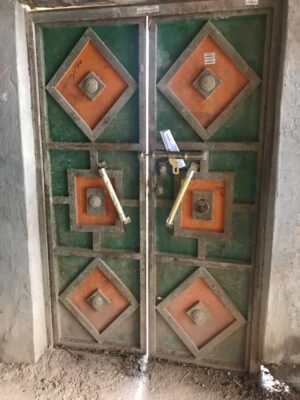
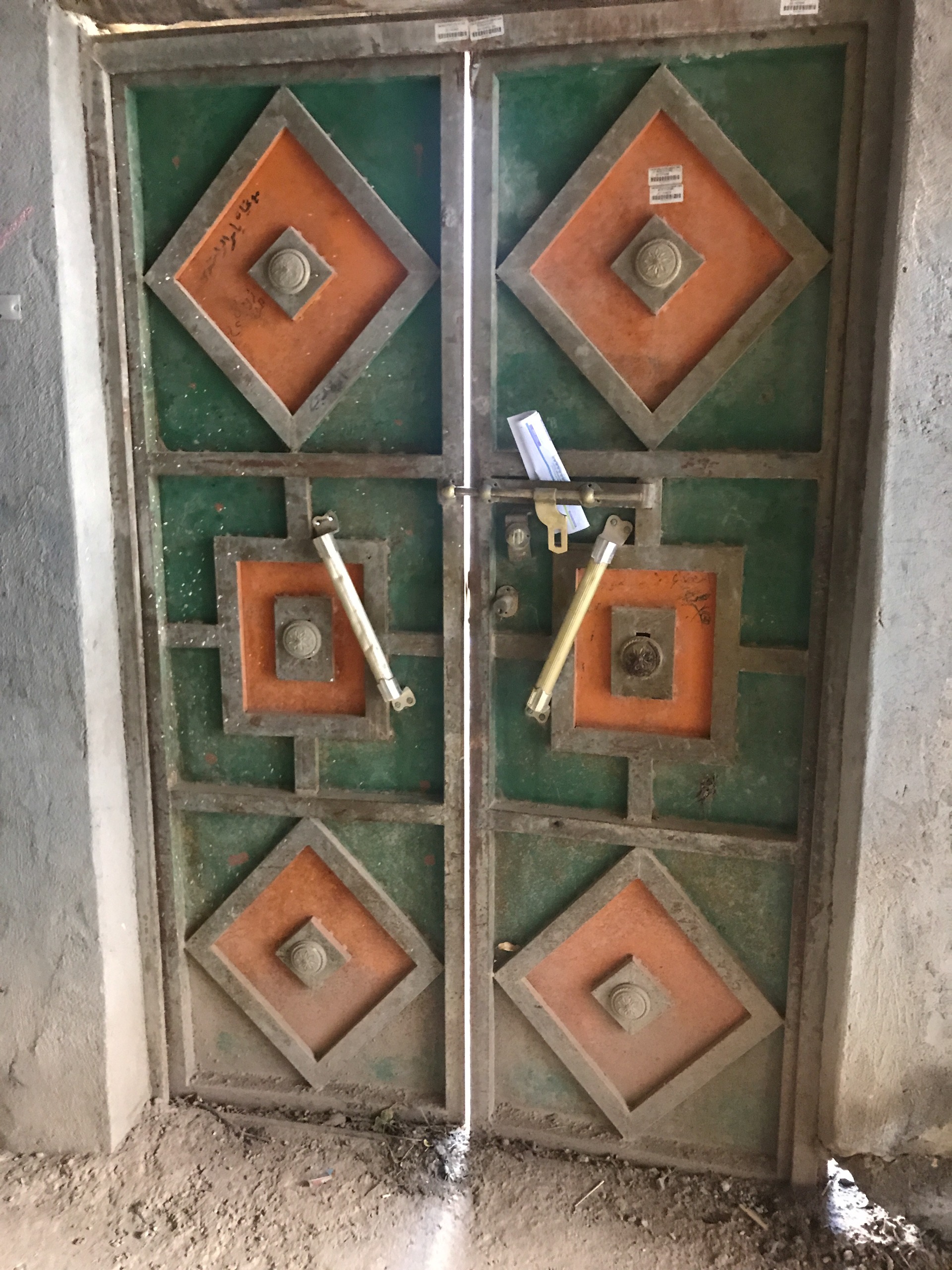
- Fig. 4: Traditional door, Nizwa, Oman. Photo: D. DeCoursey
-
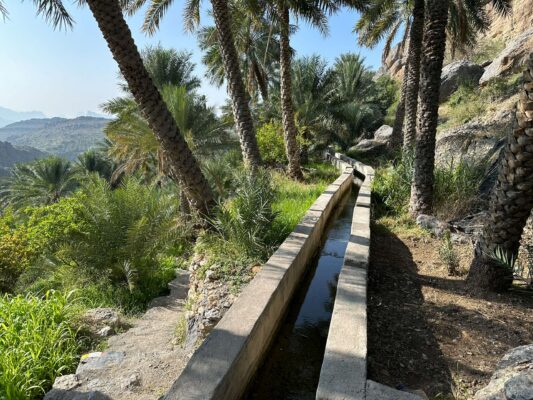
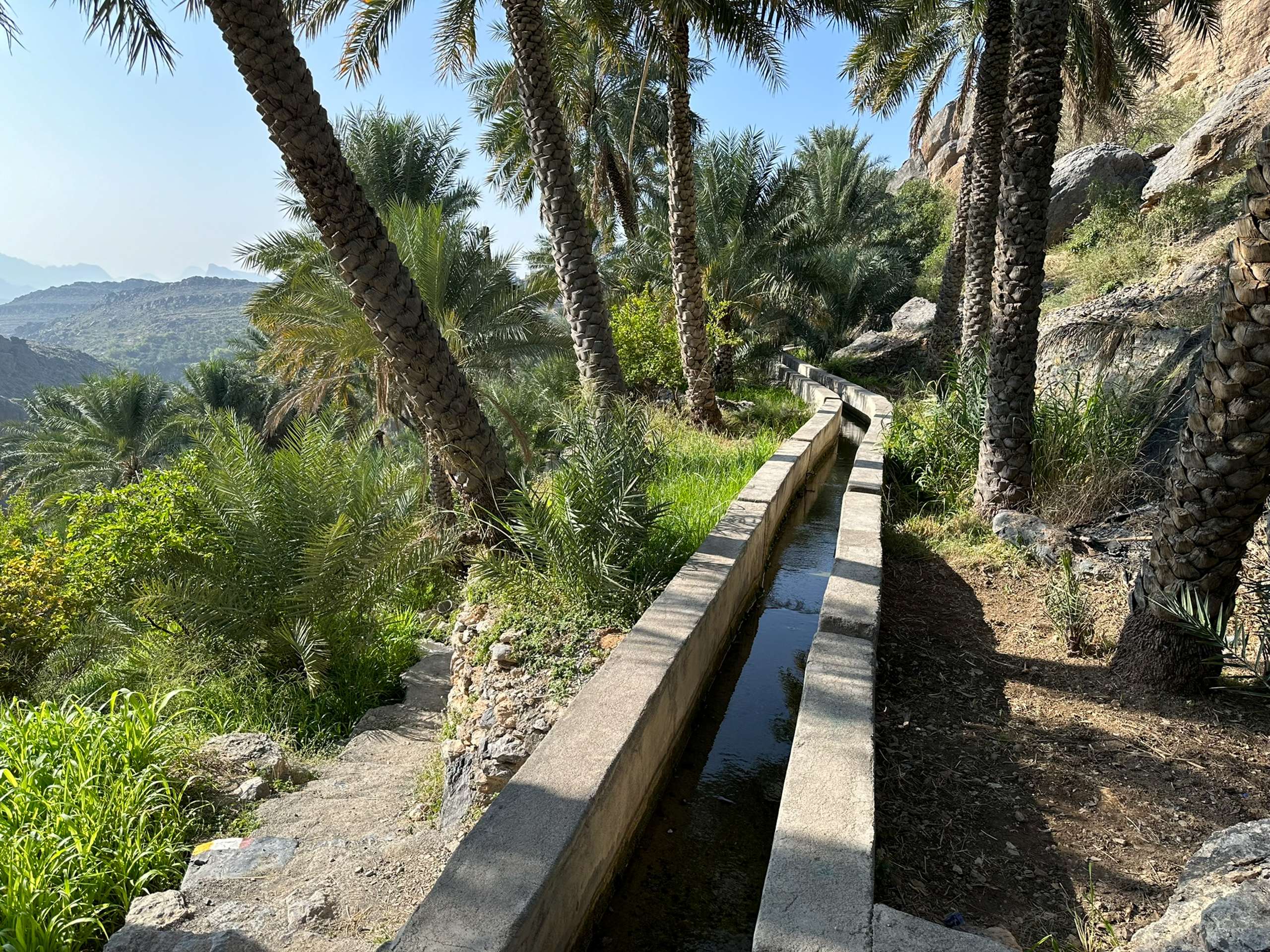
- Fig. 5: Traditional irrigation system/falag, Nizwa, Oman. Photo: D. DeCoursey
In another piece, called Al Batinah Plains, the pieces of cloth that had been buried in various farm fields and soils in Oman were combined in a quilt pattern that resembles an aerial photograph of the rich coastal plains soils and farms from which they came (Figs. 6a and 6b).
-
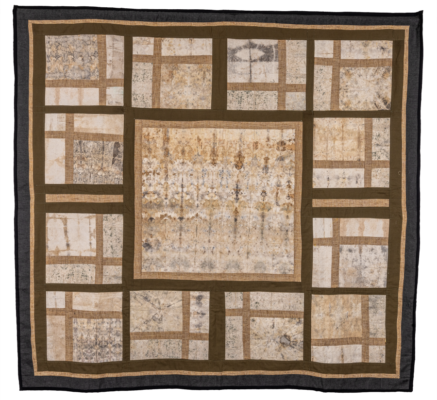
- Fig. 6a: Al Batinah Plains, quilt made of buried cotton cloth, commercial cotton fabric backing, 46″ x 49″, Oman and USA, 2024. Photo: David Mayes

-
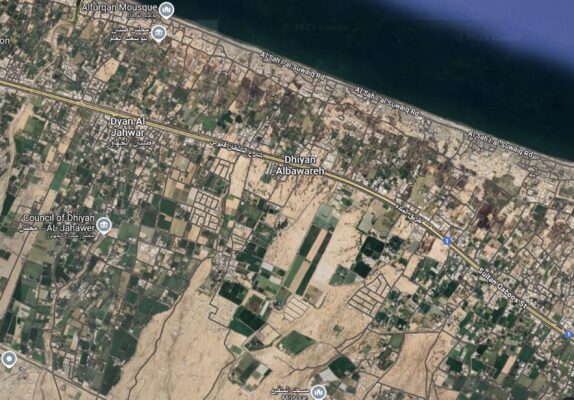
- Fig. 6b: Google map screenshot of the Al Batinah Plains farming region, Oman.

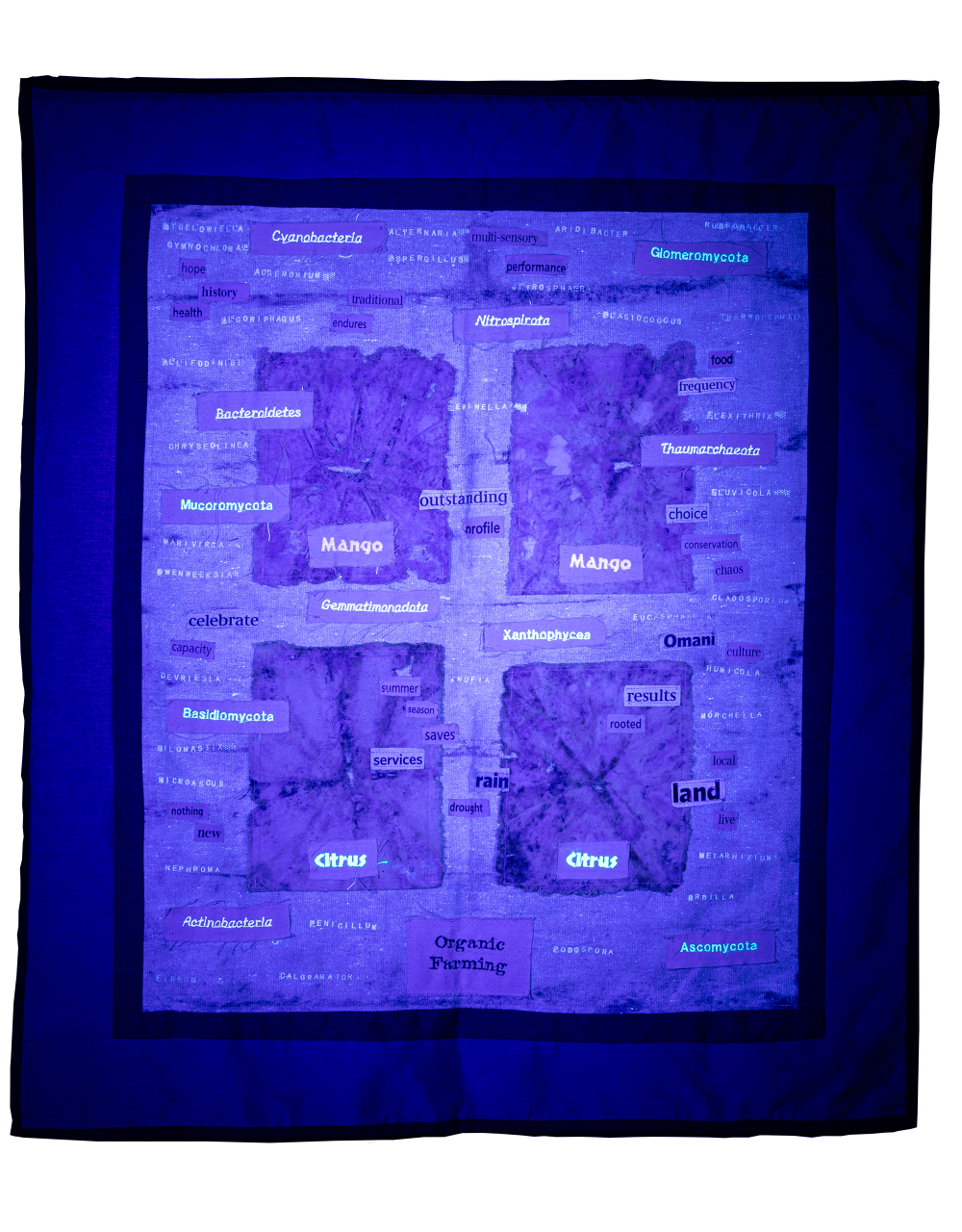
As an agricultural researcher, I also conducted farming experiments in Oman. I compared mango and citrus grown using organic farming practices, including compost, to those grown with chemical fertilizer (Figs. 7a and 7b). I also had the opportunity to collaborate with a soil microbiologist, extract the DNA from our soil samples, and learn the actual names of each bacterial and fungal species that left marks on our cloth—over 1400 species of each! I sampled some of the fields and farms in Oman and also ran samples for eight collaborating artists in the USA, across many biomes, including forests, deserts, wetlands, and gardens. This data contributed to the Soil Dialogues pieces described later in this paper and to the next piece.
-

- Fig. 7a: Fruit Crops Experiment, Sultan Qaboos University, Muscat, Oman.

-
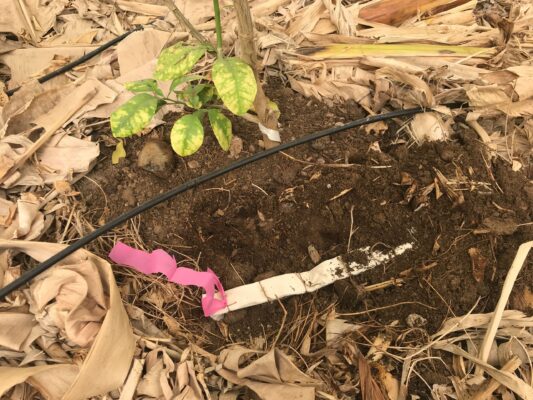
- Fig. 7b: Burying the cotton cloth in the Fruit Crops Experiment, Sultan Qaboos University, Muscat, Oman.

Making the invisible visible was one goal in the piece, Signs of Life (Figs. 8a and 8b). In it, cloth buried in the organic fruit experiment in Oman was sewn together and labeled with the names of some of the microbes present. The labels were made of UV light-sensitive thread and ink, so the names can only be seen if one has the UV light with which to see them.
Cotton cloth decomposition is now considered a reliable indicator of soil health, used worldwide, and serves as an indicator of water quality and stream health.2,7,3 This test is more resilient and a better predictor of microbial diversity than the also popular paper chromatography test.8 The remarkable diversity of pigments produced by the bacteria and fungi can be used to document the soil microbiome and the subtle effects of changes in soil conditions and climate.9,10
-

- Fig. 8a: Signs of Life (Natural light), quilt made of buried cotton cloth, commercial cotton fabric backing, UV sensitive thread, UV sensitive ink. 32” x 28”, Oman and USA, 2024.

-
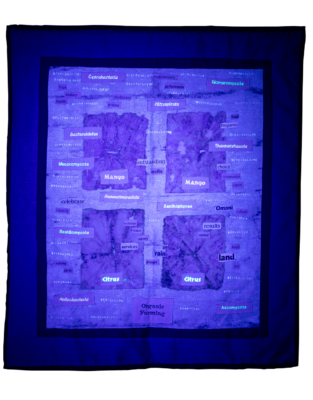
- Fig. 8b: Signs of Life (Ultra-violet/UV light). Photos: David Mayes
III. Beyond Agriculture by Deanna Pindell
The Soil Remembers in Port Townsend, Washington
The Soil Remembers is a site-specific art/science collaboration resulting in public art created for Fort Worden State Park in Port Townsend, Washington, USA. Rhonda Janke and I led the collaboration, which included several participants.11 We sought to tell the story of this land from the point of view of the living soils, incorporating both natural and cultural histories into a place-making walkabout for the 430-acre park.
-
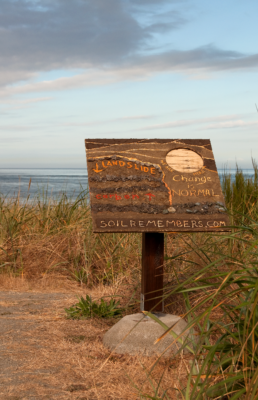
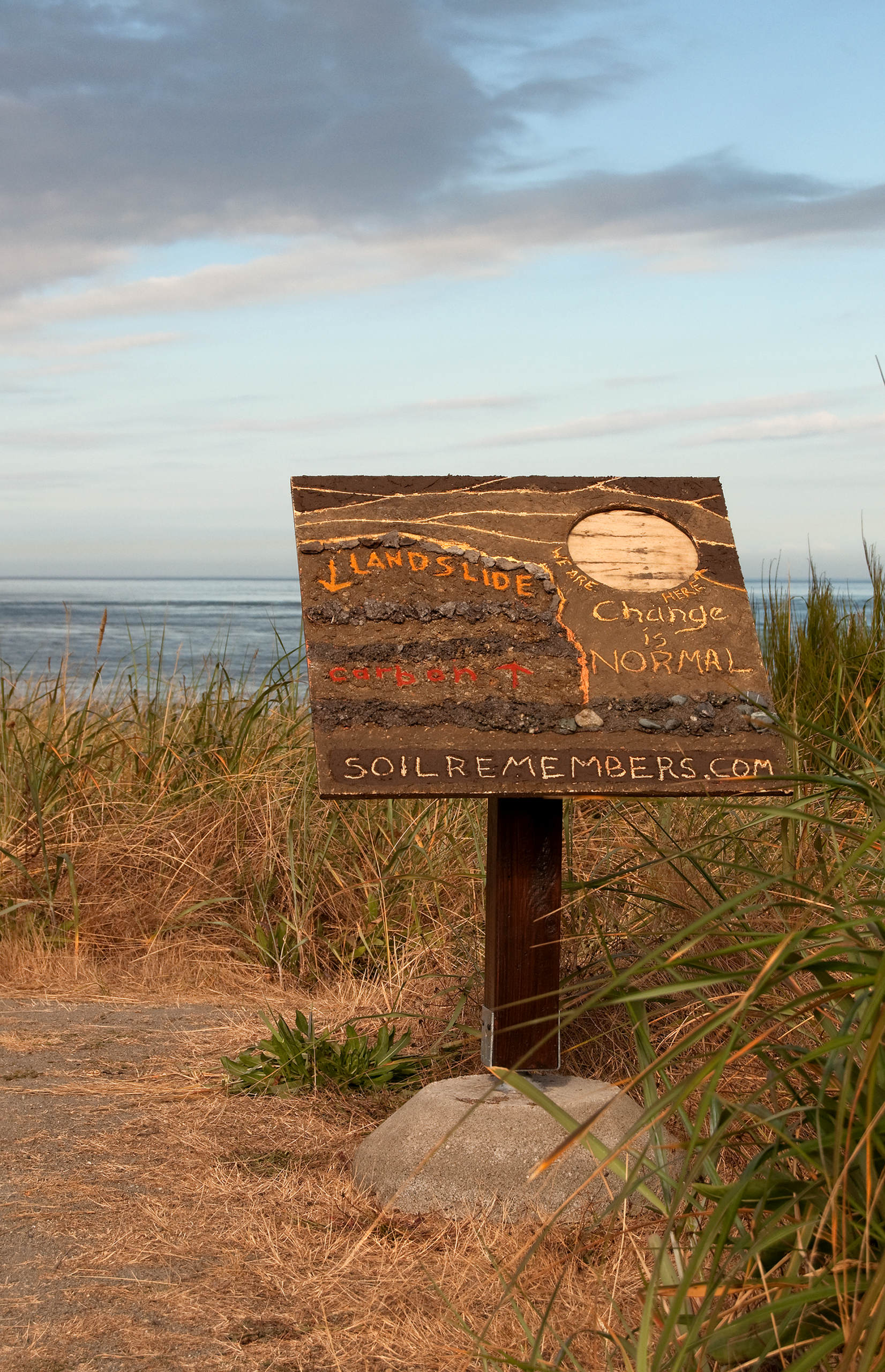
- Fig. 9: The Soil Remembers, Landslide, Rhonda Janke and Deanna Pindell, mixed media. 42″ x 24″ x 24″, Fort Worden State Park, Washington, 2011-2013.
-

- Fig. 10: Detail view: The Soil Remembers, Landslide.

With approval from state officials, our group of artists and soil scientists began by burying cloth in several locations, collecting soil samples to conduct soil tests, and researching soil history, geology, and subsurface characteristics. Many types of soils are found in this saltwater peninsula, including forestland, sandy beaches, historically recent construction, and exposed cliff faces with layers of peat deposited twenty thousand years ago. The land on which this fort is located has a particularly rich cultural history, as well. Both historic and contemporary indigenous peoples from around the Salish Sea have used this location, as did an early 1900s Chinese farming community. It also has a unique military history. Now, as a state park, this land has many public community uses, making it a viable location for public eco-art.
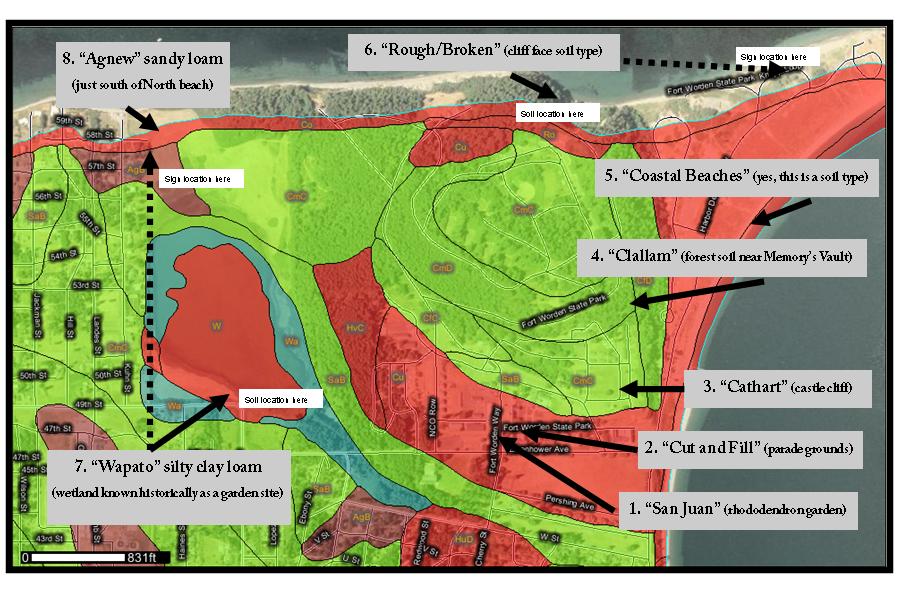
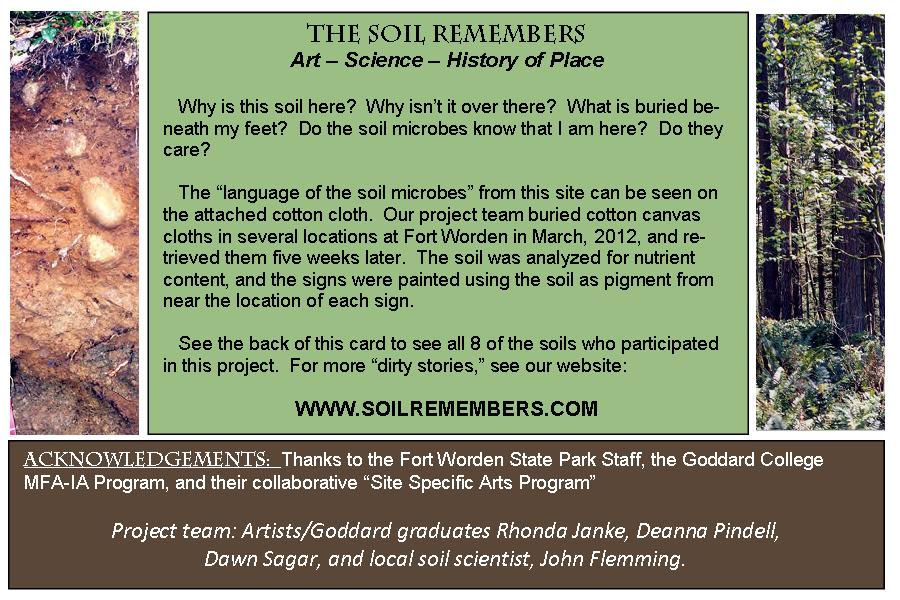
Then, the artists selected seven sites to develop as an accessible walking tour. The sculptural signs were designed to subversively resemble the quintessential State Park signage: sturdy and blocky but reassuringly familiar and informative. However, each one presented a textural twist using the soils, sand, and pebbles from each location mixed with adhesive in a playful style. They each featured a cut-out window covered with cloth that had been colored by the 30-day incubation process with microbes in that location and handwritten text representing the voice of the microbes (Figs. 9-12). These were installed twice, August through September in 2012 and 2013. A small container attached to the signposts provided visitors with a printed postcard and map. The URL listed on the sign, SoilRemembers.com, led to an educational website including the Microbe Manifesto (Fig. 16).
-
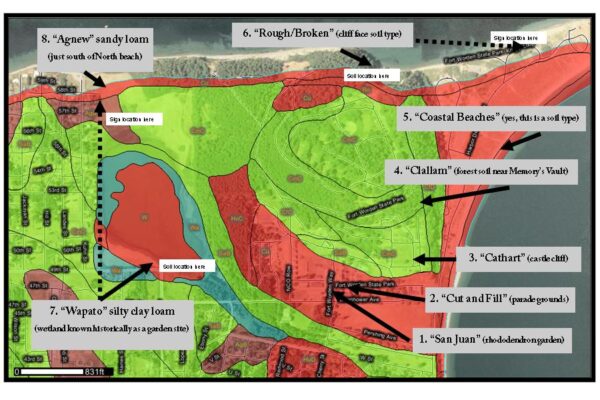
- Fig. 11: Map on postcard from The Soil Remembers, Landslide. Postcard designed by Rhonda Janke.
-
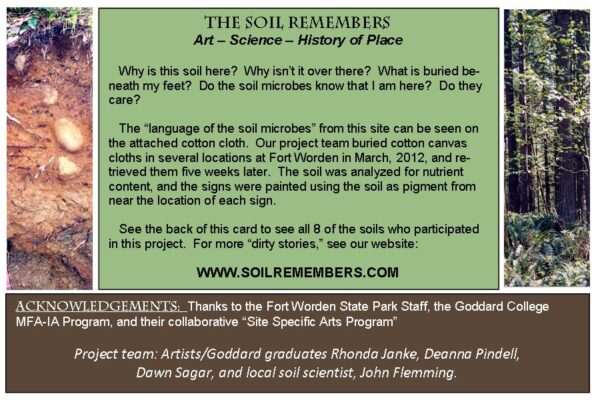
- Fig. 12: Information on postcard from The Soil Remembers, Landslide.
Soil Dialogues in Florence, Italy
Soil Dialogues is an international group of soil-focused artists and scientists who have been meeting since 2021, with up to 30 active members. Founded, led, and curated by Patricia Watts, director of ecoartspace, the group collectively agreed that each would start with a cloth burial and then create their response.12 In 2024, the group traveled to Italy with several presentations for the 100th Anniversary Congress of the International Union of Soil Scientists. They were the first group of artists to present in the history of the Congress. They also hosted a week-long exhibit with several events in Florence, Italy.
The artistic responses to the buried cloth were wide-ranging, some simple and some very complex. Alex Toland presented work from her ongoing collaborative research project, Sky inside the Soil, with Caroline Ektander: buried silk clothing printed with imagery of factories using toxic soil from a superfund site in Germany. Saskia Jorda’s Rooted project (Fig. 13) compares the embedded information of the unseen soil microbes to the idea of memory—specifically to connotations of homeland and the uprootedness of the immigrant experience—through her creation of mycelium-embroidered, canvas slippers. The slippers reference the walking migrations of her forebears, as well as her emigration from her native Venezuela to the United States as a teenager.13
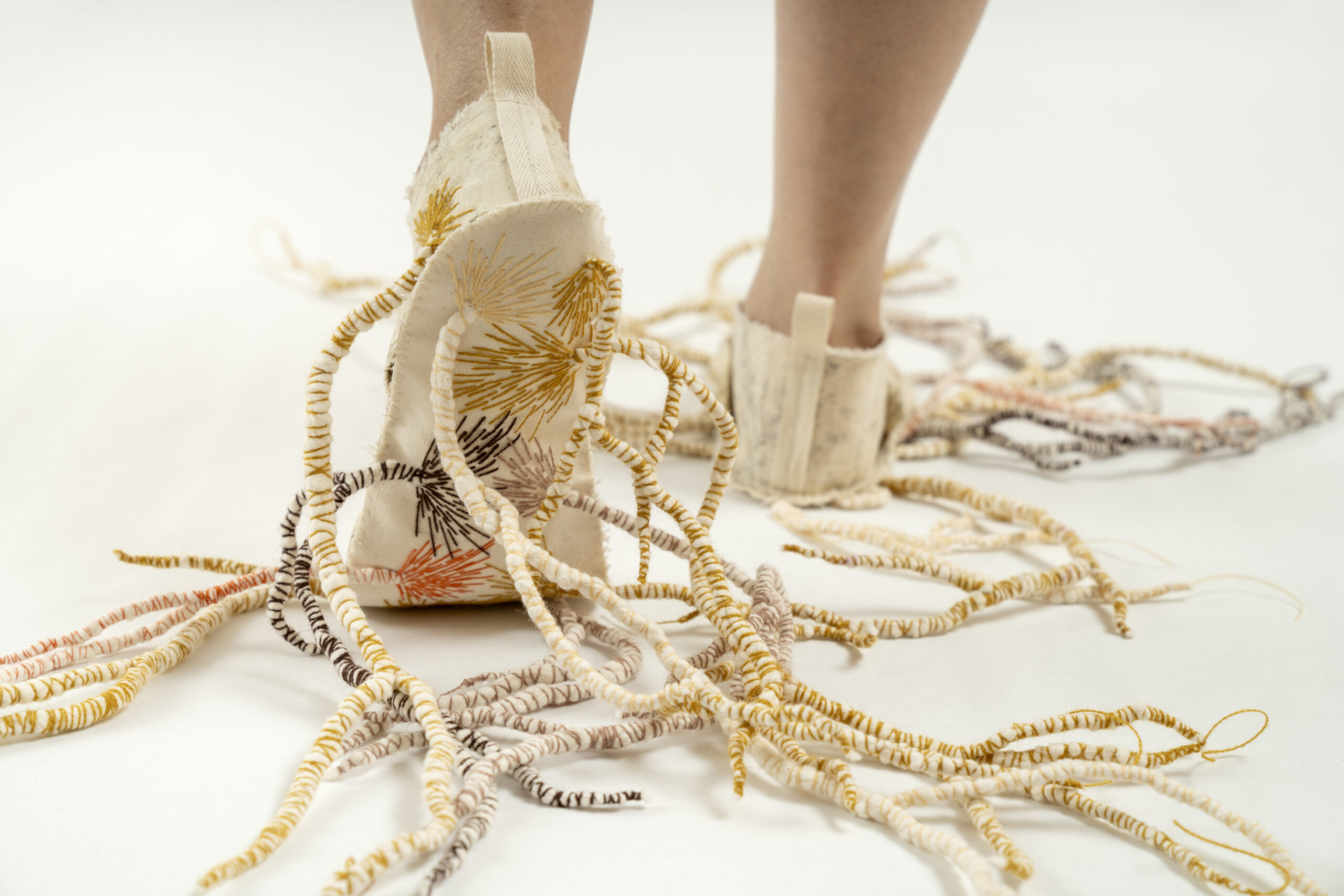
Fig. 13: Rooted, Saskia Jorda, buried and unearthed canvas, thread, cotton fiber, cotton twill tape, ink transfer, 5″ h x 24″ w x 24″ d, 2024. Photo: Grey Shed Studio
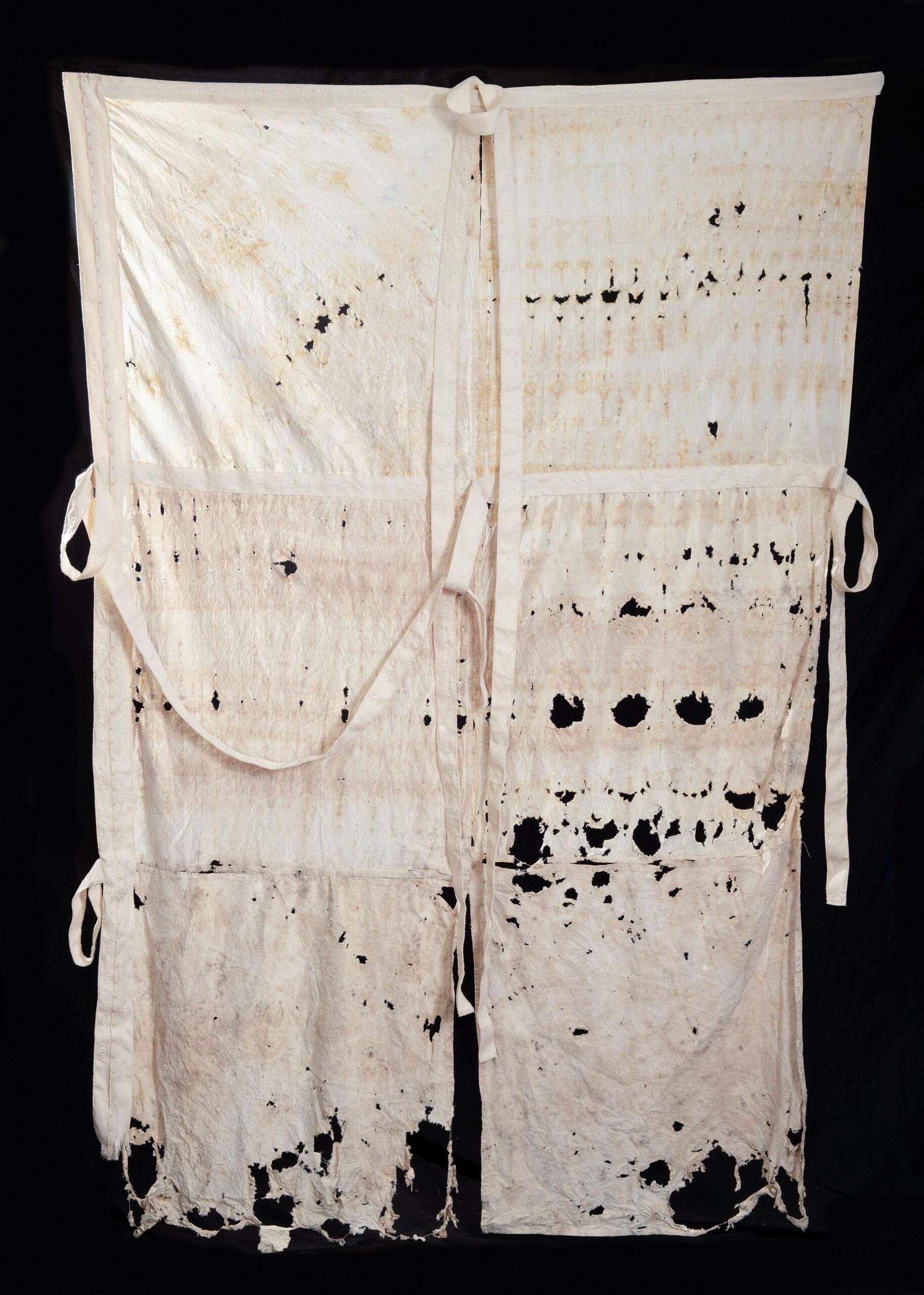
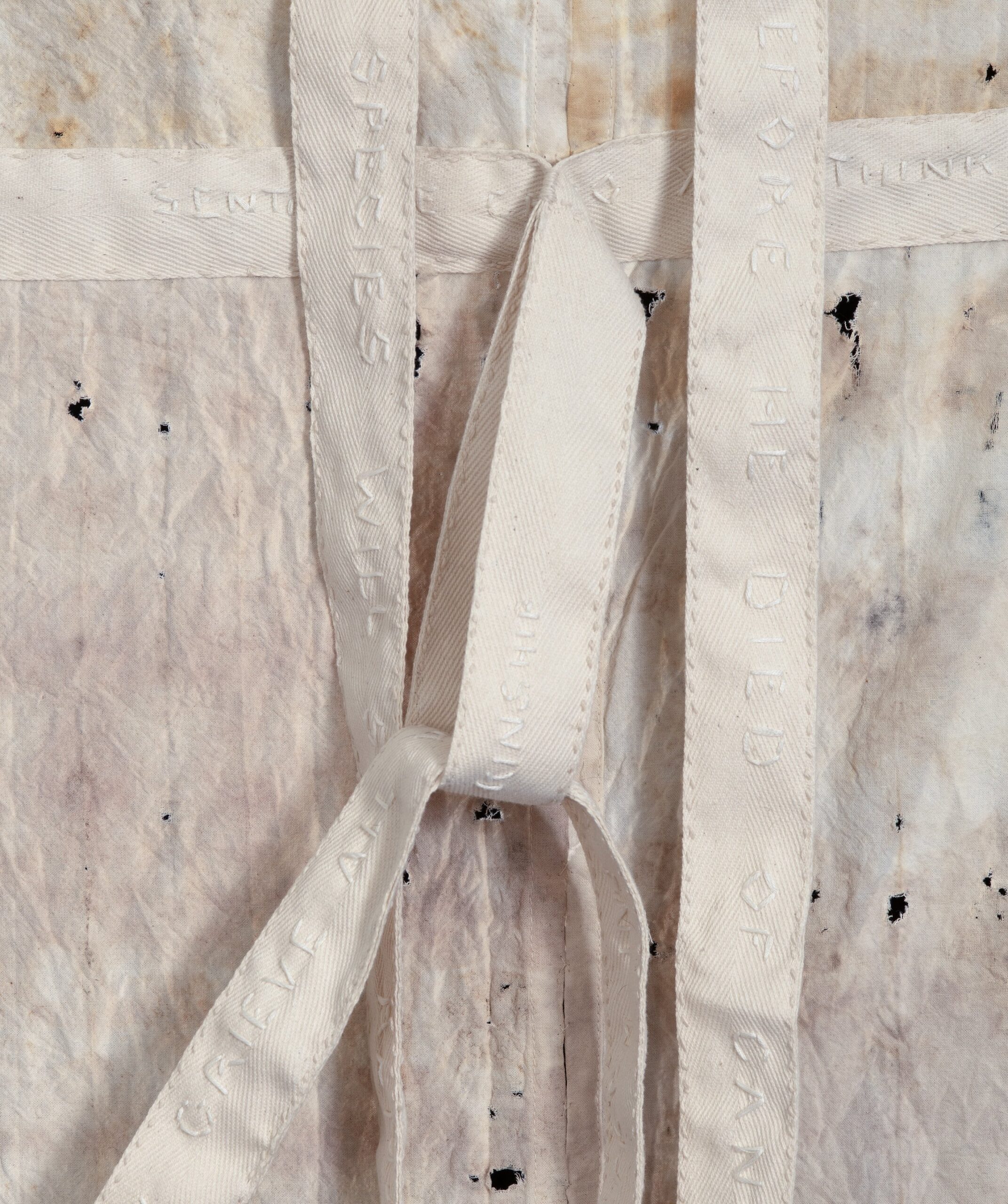
I contributed a traditional burial shroud, made by hand-stitching several pieces of the buried cloth (Figs. 14 and 15). The cloth had been buried in the Pacific Northwest. The cotton twill bands, with traditional loops for enclosing the body, have white-on-white embroidered text. A few lines from the extensive text, embroidered on the shroud, read:
I am not an individual, and you are not an individual. We are each a multispecies
collaborative of symbiotic critters.
Of course, fungi have language. Of course they do. Why wouldn’t they?
She tends to her microbiota, her kith and kin.
Why do humans rush to kill everything they don’t understand? Fungicide,
genocide.
Do microbes grieve? As a pantheist, I have to imagine they must.
Where is the limit to your empathy? Why is it so strange? I can only grieve all of
them.
In my artist statement, I described the piece:
inside my body will some day join the microbes and fungi of the soil. The text
embroidered into this burial shroud is inspired by these thoughts and our
anthropocentric disdain for these amazing critters on whom our lives depend.
-
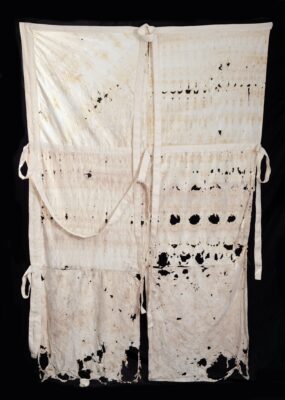
- Fig. 14: Burial Shroud, cotton fabric, embroidery, 7’ h x 5’ w, Pacific Northwest, USA, 2024.
-

- Fig. 15: Burial Shroud (detail). Photos: David Conklin
Equally complex concepts were expressed in the many other works displayed in Florence, and the collaborative projects are ongoing. Patricia Watts is working with Alexandra Toland, editor of Field to Palette, to publish a book, Soils Turn, on these works and numerous other soil-focused artists.13 The book release in 2026 will be accompanied by an Exquisite Corpse Burial Shroud exhibit, made by stitching together microbially-stained cloth contributed from soils (and artists) around the world.
Groundwork: The contemporary artistic responses to the cloth burial conversational method have roots in eco-feminist, multi-species, and post-humanist discourse. We recognize the foundational work of many women eco-artists from the early days of Earth Art and Land Art, and the growing cadre of contemporary women working with soils in interdisciplinary, multi-species, and post-human ways.
As a methodology, cloth burial is rich with metaphoric and historical layers as well as an opportunity to recognize and respond to the microbial mark-making as an artistic conversation. These textiles invite the soft embrace of sensory, embodied ways of observing the nearly invisible lifeways of soil. Western binaries of art and science are reintegrated as rural communities engage with the cloth burials, supporting traditional knowledge about soil fertility and composting.
Humans protect what they love, so the development of empathic connection for the teeming life within soils is essential to productive conservation and care for these habitats. Although anthropocentric and extractive perspectives currently dominate the world’s capitalistic cultures, arts-based thinking can lead humans toward a multi-species, more-than-human, embodied and entangled, reciprocal relationship with the microbial life of soils.
Microbe Manifesto: The commonalities shared by both methodologies, art and science, lie with the excitement of inquiry, a willingness to dwell in the unknown, and to converse with the invisible.
We close with the voices of the microbes themselves, in the Microbe Manifesto.16,17 It begins: “We, the inhabitants of the soil, in order to form a more perfect onion, choose to engage in a social contract of mutual benefit and do hereby release this Manifesto.”
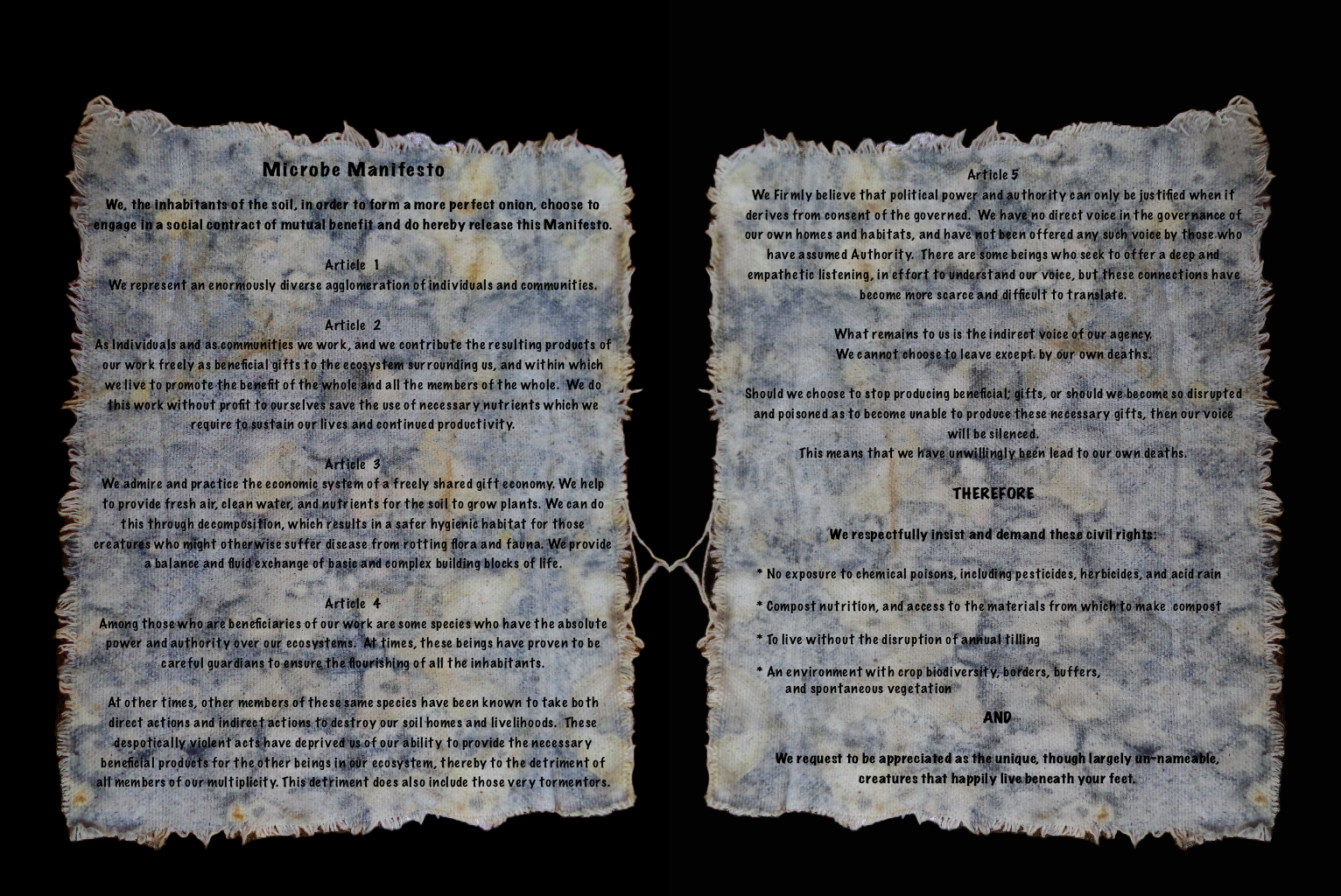
Fig. 16: Microbe Manifesto, digital image, cotton canvas, 2011-2023.
- A.F. Harrison, P.M. Latter and D.W.H. Walton, eds., Cotton Strip Assay: An Index of Decomposition in Soils, ITE Symposium no. 24 (Natural Environment Research Council, Institute of Terrestrial Ecology, 1988), 176.
- Fanny Colas, Guy Woodward, Francis J. Burdon, et al, “Towards a Simple Global-Standard Bioassay for a Key Ecosystem Process: Organic-Matter Decomposition Using Cotton Strip,” Ecological Indicators 106 (2019): 105466, https://doi.org/10.1016/j.ecolind.2019.105466.
- Carlos Carballeira, Rubén Villares, Breixo Mata-Rivas, and Alejo Carballeira, “The Cotton-Strip Assay as an Environmental Surveillance Tool for Ecological Integrity Assessment of Rivers Affected by WWTP Effluents,” Water Research 169 (2020): 115247, https://doi.org/10.1016/j.watres.2019.115247.
- Deep Chandra Suyal, Ravindra Soni, Dhananjay Kumar Singh, and Reeta Goel, “Microbiome Change of Agricultural Soil under Organic Farming Practices,” Biologia 76 (2021): 1315–1325.
- “Soil Calendar,” Rhonda Janke, accessed September 4, 2025, https://www.rhondajanke.art/research-on-buried-cloth-methods/soil-calendar.
- “‘Collaboration with Soil’ project at Goddard College, 2010-2011,” Parideaza Farm Art, accessed September 4, 2025, https://parideazafarmart.wordpress.com/collaboration-with-soil/.
- Anthony Bly, Cotton Strip Soil Test: Rapid Assessment of Soil Microbial Activity and Diversity in the Field (South Dakota State University Extension, 2020), https://extension.sdstate.edu/cotton-strip-soil-test-rapid-assessment-soil-microbial-activity-and-diversity-field.
- Benjamin M. Ford, Barbara A. Stewart, David J. Tunbridge, and Pip Tilbrook, “Paper Chromatography: An Inconsistent Tool for Assessing Soil Health,” Geoderma 383 (2021): 114783, https://doi.org/10.1016/j.geoderma.2020.114783.
- Rodrigo Salazar Celedón and Leticia Barrientos Díaz, “Natural Pigments of Bacterial Origin and Their Possible Biomedical Applications,” Microorganisms 9, no. 4 (2021): 739, https://doi.org/10.3390/microorganisms9040739.
- Rishu Kalra, Xavier A. Conlan, and Mayurika Goel, “Fungi as a Potential Source of Pigments: Harnessing Filamentous Fungi,” Frontiers in Chemistry 8 (2020): 369, https://doi.org/10.3389/fchem.2020.00369.
- Deanna Pindell, accessed September 4, 2025, https://www.deannapindell.net.
- Ecoartspace, accessed September 4, 2025, https://ecoartspace.org.
- Saskia Jorda, accessed September 4, 2025, https://www.saskiajorda.com/.
- “About,” Michelle Stuart Studio, accessed February 25, 2026, https://michellestuartstudio.com/about/.
- “Seed Bombs,” The Multispecies Salon, accessed February 25, 2026, https://www.multispecies-salon.org/ecoart/seedbombs/.
- Alexandra Toland, Jay Stratton Noller, and Gerd Wessolek, Field to Palette: Dialogues on Soil and Art in the Anthropocene (CRC Press, 2019), 681.
- Kim Abeles and WhiteFeather Hunter, Earthkeepers’ Handbook (Ecoartspace, 2023), 202.
- “Microbe Manifesto.” Deanna Pindell, accessed September 4, 2025, https://www.deannapindell.net/_files/ugd/770af2_cbcdd7b3c046b9aedb62855b6f58ac39.pdf.
© Copyright 2026 Women Eco Artists Dialog. All rights reserved.